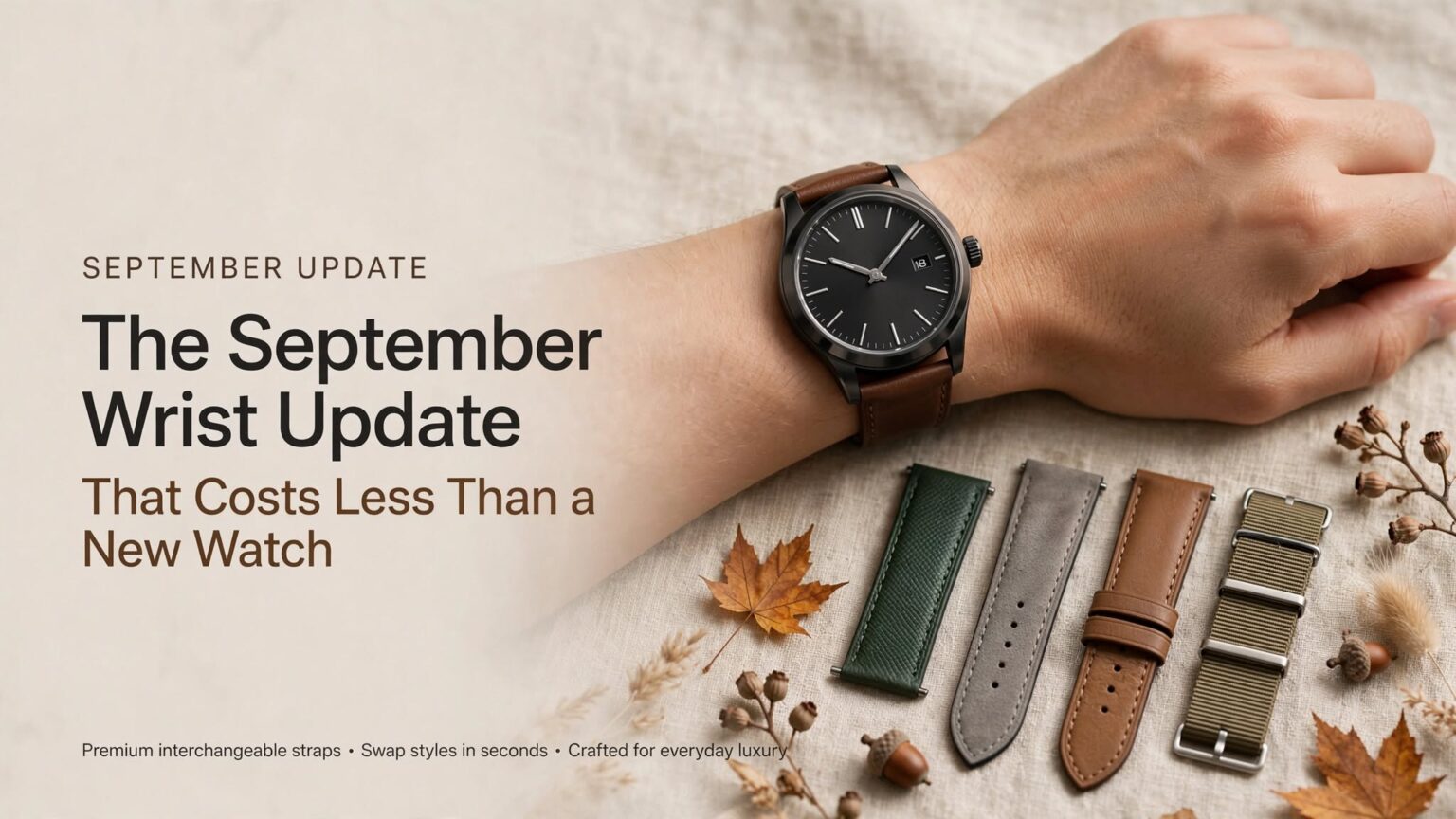

September changes how people dress in Britain. Lightweight summer clothing begins to give way to jackets, knitwear and darker shoes, but the weather can still move between warm afternoons and wet commutes. It is a month when wardrobes adjust gradually rather than all at once. Watches can follow the same approach.
A watch that felt right with short sleeves in July may seem overly sporty beside a wool jacket. A formal piece that stayed in its box during the holidays may be useful again once office routines return. Changing the strap is a practical way to bring those watches back into rotation without buying a seasonal watch or altering the case and dial.
Begin with the watch rather than the trend
Seasonal colour lists can be useful, but the dial and case should guide the decision. A silver case with a white, black or blue dial gives plenty of freedom. Warm metal tones often work well with tan, brown, burgundy and deep green. A busy chronograph may benefit from a quieter strap, while a simple three-hand watch can carry more texture or contrast.
Proportion matters too. Thick, heavily padded leather can overwhelm a slim case. A substantial sports watch may make a very fine strap look undersized. Looking at the case thickness, lug shape and dial design helps narrow the choice before colour enters the discussion.
Read also The European city giving stag weekends a fresh twist
Start with the measurement at the lugs
The correct width is not based on the diameter of the watch. It comes from the gap between the inside edges of the lugs, measured in millimetres. The size is sometimes marked on the back of the old strap, although wear or previous replacements can make that information unreliable. Measuring the case is a sensible check.
For a watch with a 20mm gap, the Watch Obsession 20mm watch strap collection includes leather, vegan leather, rubber, nylon, canvas, sailcloth and stainless-steel options. The breadth of material matters in September because the best update may be about comfort and use rather than colour alone.
Move from summer materials to transitional choices
Rubber is useful for hot weather, swimming and active days, but it can give some watches a distinctly sporty appearance. When work routines resume, leather can make the same case feel more considered. Smooth calfskin creates a clean finish, while grained, vintage or embossed leather adds texture that works naturally with heavier clothes.
Fabric remains useful during the transition. Nylon is light and easy to wear on milder days. Canvas has a more structured woven surface that sits well with denim, overshirts and practical jackets. Sailcloth-style straps can keep some of the sporting character of rubber while looking less summery.
Metal bracelets need not be packed away. They work throughout the year and handle changing weather well when used within the watch manufacturer’s guidance. The point is to decide whether the current bracelet still gives the look and comfort wanted. If it does, there is no reason to replace it simply because the month has changed.
Use colour without rebuilding the wardrobe
Black and dark brown remain dependable because they relate easily to shoes, bags and belts. September also creates room for colours that have depth without being difficult to wear. Navy, charcoal, olive, burgundy and cognac can change the appearance of a watch while staying practical with British workwear and weekend clothing.
A strap does not have to match shoes precisely. Modern wardrobes are less rigid than that. It can instead pick up a dial accent, echo the tone of a jacket, or provide a controlled contrast against neutral clothes. A blue strap on a white-dial watch can look clean with navy tailoring. Burgundy can add warmth to grey knitwear. Olive fabric can make a straightforward field watch feel at home with work jackets and denim.
Bright colours can also work when used in a smaller area. Red, orange or turquoise may feel excessive across a coat, but a narrow strip at the wrist is easier to manage. Watch Obsession lists straps in those shades alongside quieter black, brown, grey and blue options, allowing the watch to carry the colour rather than the whole outfit.
Check length and buckle details before ordering
Lug width is only one part of fit. Strap length affects where the buckle sits and how much material remains after fastening. Comparing a comfortable existing strap with the published measurements is more dependable than assuming that a standard length will suit every wrist.
The buckle end deserves attention if the original clasp will be reused. Many straps taper, so a design that measures 20mm at the watch may be 18mm or 16mm at the other end. Buckle colour matters visually as well. Polished steel, brushed steel, black, gold and rose-gold finishes can relate differently to the case.
Quick-release spring bars are helpful for anyone planning to switch between an office strap and a weekend option. Standard spring bars are also manageable with the right tool and a steady hand. When the fitting is unfamiliar or the case is valuable, using a professional avoids an unnecessary scratch.
Keep the new strap ready for British weather
Care should match the material. Leather usually benefits from being kept away from prolonged moisture and allowed to dry naturally if it becomes damp. Fabric care varies between nylon, canvas and Cordura, so manufacturer instructions should be checked before soaking or using cleaning products. Rubber can be practical around water, but the watch’s own water resistance still determines what the complete watch can handle.
September is a useful time to inspect the spring bars, buckle and underside of the current strap. Cracking leather, stretched holes, frayed fabric or an unreliable fastening are reasons to act before appearance becomes the main concern. A considered replacement can improve comfort, suit the return to layered clothing and keep an existing watch in daily use for another season.
Read also How To Stop a Navy Wedding Suit Looking Like Office Wear
