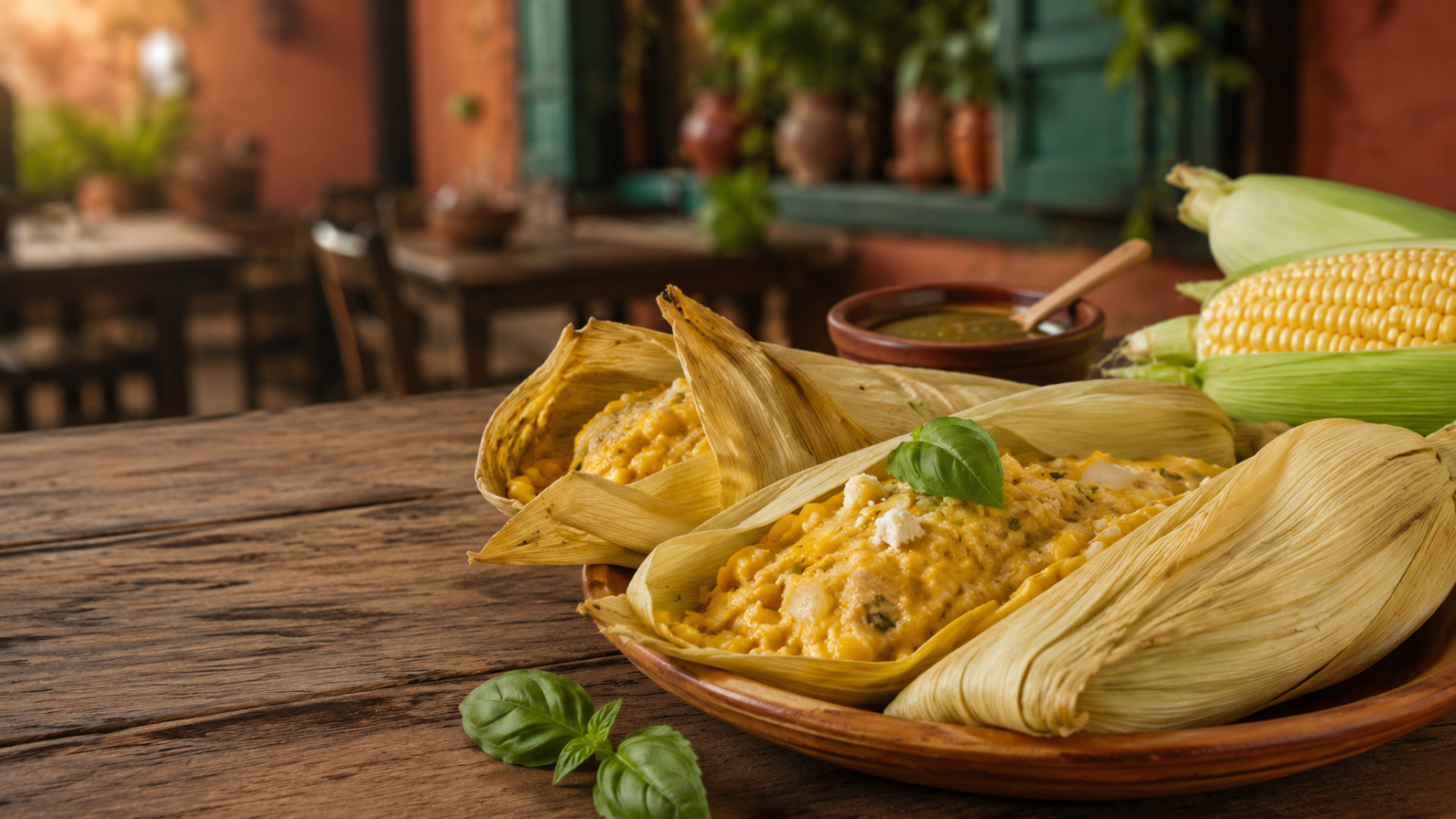

If you are searching for the best humita en chala near me, you are probably looking for a restaurant, food market, bakery, or Latin American kitchen that serves this traditional corn dish fresh and in the proper style. Humita en chala is closely associated with the cuisine of northwestern Argentina and other parts of the Andes. Made from fresh corn and wrapped in corn husks, it has a soft, creamy texture and a naturally sweet-savory flavor. Finding a good version is not only about choosing the highest-rated restaurant. Fresh ingredients, regional preparation, texture, and proper cooking matter just as much.
What Is Humita en Chala?
Humita is a traditional corn-based dish with pre-Columbian roots in the Andean region of South America. In Argentina, it is especially associated with provinces such as Salta, Jujuy, and Tucumán, where corn has long played an important role in regional cooking.
The word “chala” refers to the outer husks of the corn cob. In humita en chala, a seasoned corn mixture is placed inside these husks, folded into a packet, tied, and then cooked until the filling becomes tender and creamy.
Traditional recipes vary from one region and household to another, but common ingredients include:
- Fresh corn
- Pumpkin or squash
- Onion
- Bell pepper
- Cheese
- Basil
- Paprika
- Cumin
- Chili or ají
Fresh corn gives humita its characteristic natural sweetness, while onion, spices, and cheese add depth and richness.
“Humita is a preparation of pre-Hispanic origin.” — Argentina’s national tourism information
What Makes a Good Humita en Chala?
When searching for the best humita en chala near me, restaurant ratings alone do not tell the whole story. A well-made humita has a few recognizable qualities that can help you judge whether it is authentic and carefully prepared.
Fresh Corn Should Be the Main Flavor
Corn is the heart of humita. Cheese, spices, and vegetables may add complexity, but they should not overpower the flavor of the corn itself.
A good humita usually tastes naturally sweet, earthy, and slightly savory. The filling should feel fresh rather than excessively processed or floury.
The Texture Should Be Creamy, Not Dry
Humita en chala should have a soft and moist filling. It should be thick enough to stay inside the corn husk when opened, but it should not be dry, grainy, or crumbly.
Depending on the recipe, grated corn may be combined with pumpkin or squash, which helps create a smoother and richer consistency.
The Corn Husk Is Part of the Traditional Preparation
Authentic humita en chala is cooked inside corn husks. The husks are not simply decorative packaging. They protect the filling during cooking and are part of the dish’s traditional preparation.
When served, the husk is opened to reveal the warm corn mixture inside.
Seasoning Should Support the Corn
Good humita does not require aggressive seasoning. Cumin, paprika, basil, ají, onion, and pepper may appear in different recipes, but the final dish should still taste primarily of corn.
Too much salt, cheese, or chili can hide the delicate sweetness that makes humita distinctive.
Humita en Chala vs. Humita a la Olla
Humita is prepared in more than one way. The two most common styles are humita en chala and humita a la olla.
Humita en chala is wrapped in corn husks and cooked as individual packets. Humita a la olla, on the other hand, is cooked directly in a pot and served more like a thick corn stew or puree.
| Dish | Main Base | Preparation | Typical Texture |
|---|---|---|---|
| Humita en chala | Fresh corn, often squash and cheese | Wrapped in corn husks and cooked | Soft, creamy, slightly firm |
| Humita a la olla | Fresh corn mixture | Cooked directly in a pot | Softer and more spoonable |
| Tamal | Corn dough with various fillings | Wrapped and steamed or boiled | Usually firmer and more dough-like |
Knowing this difference is useful when reading a menu. A restaurant may simply list “humita,” but that does not always mean the dish will arrive wrapped in corn husks.
Is Humita the Same as a Tamal?
No. Humita and tamales belong to related corn-based culinary traditions, but they are not the same dish.
Humita is commonly made from fresh grated or ground corn, giving it a softer and more naturally sweet texture. Tamales are generally made from a more structured corn dough and may include meat, vegetables, sauces, or other fillings.
Humita en chala can look similar to a tamal because both are wrapped before cooking, but the texture and ingredients are noticeably different.
If you specifically want humita, check that the restaurant describes the dish as being made with fresh corn rather than simply serving a generic corn tamal.
How to Find the Best Humita en Chala Near You
The phrase “best humita en chala near me” shows strong local search intent. The goal is usually to find a nearby place that serves the dish rather than simply learn how it is made.
A few search strategies can make the process easier.
Search for Argentine and Andean Restaurants
Start with restaurants specializing in:
- Argentine cuisine
- Northern Argentine cuisine
- Andean food
- Bolivian cuisine
- Peruvian regional cuisine
- South American food
Humita exists in several South American culinary traditions, although ingredients and preparation can vary by country.
Look at the Actual Menu
A restaurant can have excellent reviews without serving humita. Before visiting, check its current menu or call ahead.
Useful menu terms include:
- Humita en chala
- Humitas
- Humita argentina
- Humita salteña
- Humita tucumana
- Humita con queso
Seasonal menus are also important because traditional humita relies heavily on fresh corn.
Search Customer Photos
Photos can reveal more than a short menu description. Traditional humita en chala should usually appear as a corn-husk packet that opens to reveal a soft yellow corn filling.
Look for a moist texture rather than something that resembles a dry block of corn dough.
Read Reviews for Specific Dish Mentions
Instead of focusing only on a restaurant’s overall score, search reviews for words such as humita, corn, Argentine food, or empanadas and humita.
A place may be known primarily for steak or empanadas while offering a particularly good regional humita as a side dish or seasonal special.
Where Is Humita en Chala Most Common?
Humita is strongly connected with the Andean regions of South America. In Argentina, it is particularly associated with the northwest, including Salta, Jujuy, Tucumán, Catamarca, and neighboring areas.
It also appears in culinary traditions in countries such as Bolivia, Chile, Peru, and Ecuador, although recipes are not identical.
For travelers in northwestern Argentina, humita is commonly found in traditional restaurants, regional markets, peñas, and establishments specializing in local food.
Outside South America, your best chance is usually an Argentine or broader Latin American restaurant with a regional menu.
What Does Humita en Chala Taste Like?
Humita has a distinctive combination of flavors that can surprise diners expecting a salty corn dish.
Fresh corn gives it noticeable sweetness. Onion and spices contribute savory notes, while cheese can add saltiness and creaminess. Pumpkin or squash may make the filling even softer and slightly sweeter.
A well-balanced humita tastes rich without being heavy.
The exact flavor depends heavily on the corn itself. This is one reason freshly prepared humita can taste very different from frozen or heavily processed versions.
Can Humita en Chala Be Vegetarian?
Many traditional versions are naturally vegetarian because their main ingredients are corn, vegetables, spices, and cheese.
However, recipes differ. Some restaurants may use animal fat, meat-based stock, or other ingredients during preparation.
If you follow a vegetarian diet, confirm the ingredients with the restaurant rather than assuming every humita is meat-free.
Vegans should also ask whether the recipe contains cheese, milk, butter, or other dairy products.
How Should Humita en Chala Be Served?
Humita en chala is generally served warm inside its corn-husk wrapping. The husk itself is not eaten.
Depending on the restaurant, it may be served as:
- A starter
- A side dish
- A light main course
- Part of a regional tasting menu
Because humita already has a rich corn flavor, it usually does not need a heavy sauce. Some versions may be accompanied by spicy salsa or regional condiments.
FAQs
What is humita en chala made of?
The main ingredient is fresh corn. Depending on the regional recipe, it may also contain pumpkin or squash, onion, peppers, cheese, basil, cumin, paprika, or chili.
Is humita en chala spicy?
Usually not. Some recipes include ají or chili, but the dish is generally mild. Its dominant flavor is normally sweet corn with savory seasoning.
Is humita en chala gluten-free?
Traditional humita is generally based on corn rather than wheat. However, restaurant recipes and kitchen practices vary, so people with celiac disease or severe gluten intolerance should confirm ingredients and cross-contamination procedures directly with the restaurant.
What is the difference between humita and tamales?
Humita is usually made from fresh corn and has a creamy texture. Tamales are generally made with a firmer corn dough and often contain separate fillings such as meat, vegetables, or sauces.
Where can I find authentic humita en chala near me?
Search for Argentine, Andean, Bolivian, or regional South American restaurants and check their current menus. Local Latin American food markets and seasonal festivals can also be good places to find it.
Can humita be eaten as a main dish?
Yes. Depending on portion size, humita can be served as an appetizer, side dish, or light main course.
Read also Best Messaging App for Content Creators: What Features Should You Look For?
Conclusion
Finding the best humita en chala near me becomes easier once you know what authentic humita should look and taste like. The best versions focus on fresh corn, a soft and creamy filling, balanced seasoning, and traditional cooking inside corn husks. Search beyond general restaurant ratings and check menus, customer photos, regional specialties, and recent reviews. Whether you find it at an Argentine restaurant, an Andean food market, or a South American festival, a properly prepared humita en chala offers one of the most distinctive expressions of traditional corn cooking in the Andes.
Another Topic To Read: Tara Beane: Billy Beane’s Wife, Family Life and the Moneyball Story
