
Square Enix is giving players more than a short combat test ahead of Final Fantasy Resonance. The publisher has released a free demo containing the game’s full first chapter, with progress carrying into the complete release on 22 October.
It is a significant move for a new entry that has to introduce an unfamiliar cast, its own world and a combat system built around collecting characters from across the Final Fantasy series. Instead of asking players to make a decision after a trailer, Square Enix is letting them experience the opening of the story at their own pace.
Digital entertainment services increasingly want people to choose quickly. A new online casino may offer a fast route into its games, while Square Enix has taken a different approach by allowing players to keep their early progress if they continue with Final Fantasy Resonance.
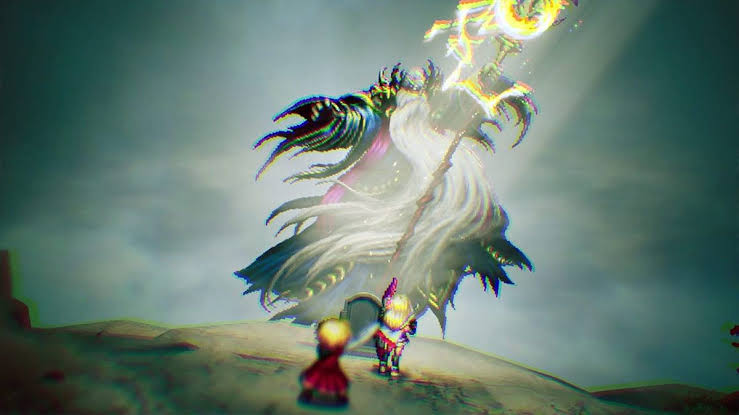
The demo arrives as interest grows in the title’s place within the wider series. It is the first Final Fantasy game produced in the HD-2D style, combining detailed pixel characters with modern lighting, depth and animated environments.
What does the Final Fantasy Resonance demo include?
The demo covers the entire first chapter of the game. That means players can follow the opening story, explore early locations, build a party and learn the basics of battle before deciding whether to buy the full version.
Save data will transfer to the full game at launch. This avoids a common frustration with demos, where several hours of progress become irrelevant once the main release arrives.
For role-playing games in particular, a usable demo can be more revealing than a polished trailer. It shows how quickly dialogue moves, how exploration feels, how often battles occur and how clearly the game explains its systems.
It also gives players time to decide if the visual style works for them. HD-2D games are often attractive in screenshots, but their real appeal comes from movement, atmosphere and the way lighting changes familiar pixel-art scenes.
A new world built around the Crystals
Final Fantasy Resonance begins with a threat to the Crystals, objects that have shaped the fate of kingdoms throughout the wider franchise. Players travel through a new world and assemble allies as they attempt to stop Veritas of the Dark.
The Crystal concept is one of the most recognisable ideas in Final Fantasy, but the game is not simply revisiting an old setting. It uses a fresh story and original locations, giving Square Enix room to bring familiar characters into a different context.
That matters because the game is designed to welcome players who do not know every previous entry. Long-term fans will recognise names, monsters and musical references, while newcomers should still be able to understand the central conflict.
The opening chapter has an important job. It needs to establish the stakes without relying too heavily on nostalgia, then give players a reason to care about the new characters before well-known faces begin to appear.
How do battles work in Final Fantasy Resonance?
The combat system uses turn-based commands, but Square Enix has added several layers that reward planning. Players can track the order of upcoming actions, target enemy weaknesses and work towards breaking an opponent’s defences.
That structure should feel familiar to people who enjoy traditional role-playing games, while still offering enough information to make each turn matter. Seeing the action order allows players to decide when to heal, defend or attack before an enemy gets the chance to respond.
Party building is also central to the experience. Characters, referred to as Visions, can join the player’s team and bring their own attacks, abilities and strategic uses. This gives the game a collection element without removing the need to think about how each character fits into the group.
A strong party cannot rely on a single powerful move. Players will need to consider elemental strengths, defensive options and the timing of abilities when tougher enemies begin to appear.
Summons are expected to play a major part too. These large-scale creatures have been part of Final Fantasy for decades, and their arrival in Resonance gives the game another connection to the series’ history.
Sephiroth gives the game an early headline moment
Square Enix has also confirmed that Sephiroth will appear in Final Fantasy Resonance. The antagonist remains one of gaming’s best-known characters, and his inclusion will attract attention even from people who have not followed every recent Final Fantasy release.
Using Sephiroth is a careful choice. He is recognisable enough to create immediate interest, but his presence also raises questions about how the game will handle characters from separate stories and timelines.
The appeal of a crossover title often depends on more than a long list of familiar names. Players want to see characters used in ways that suit their original identities, rather than appearing as brief cameos with little relevance to the main adventure.
If Final Fantasy Resonance can balance its new cast with these established figures, it could give the game a wider emotional range than a standard spin-off.
Why the HD-2D format suits Final Fantasy
The HD-2D look has become closely associated with Square Enix projects such as Octopath Traveler and Triangle Strategy. It preserves the clarity of classic sprite-based games while adding shadows, reflections and a sense of scale that older hardware could not achieve.
For Final Fantasy, the approach feels especially appropriate. The series began with pixel-art worlds, dramatic battle screens and memorable locations created with limited technology. HD-2D allows Square Enix to revisit that visual language without making the game feel trapped in the past.
It may also help the game stand apart from the increasingly cinematic mainline releases. Recent Final Fantasy games have pushed towards large 3D environments and action-heavy combat. Resonance offers a more compact, deliberately stylised alternative.
That difference does not make it a smaller ambition. A strong world, satisfying battle system and convincing character relationships can carry a role-playing game just as effectively as expensive cutscenes.
A useful test before October
The demo will give Square Enix early feedback ahead of release. Players are likely to focus on the pace of the opening chapter, the clarity of the battle tutorial and how rewarding it feels to experiment with different Visions.
For fans, it is an opportunity to see exactly what kind of game Final Fantasy Resonance wants to be. The full first chapter provides enough time to form an opinion, while the save transfer means there is no penalty for getting started early.
With launch set for 22 October on PlayStation 5, Xbox Series X and S, Nintendo Switch, Nintendo Switch 2 and PC, Final Fantasy Resonance is being positioned for a wide audience. The demo is a confident first step, offering players a genuine introduction rather than a carefully controlled preview.
