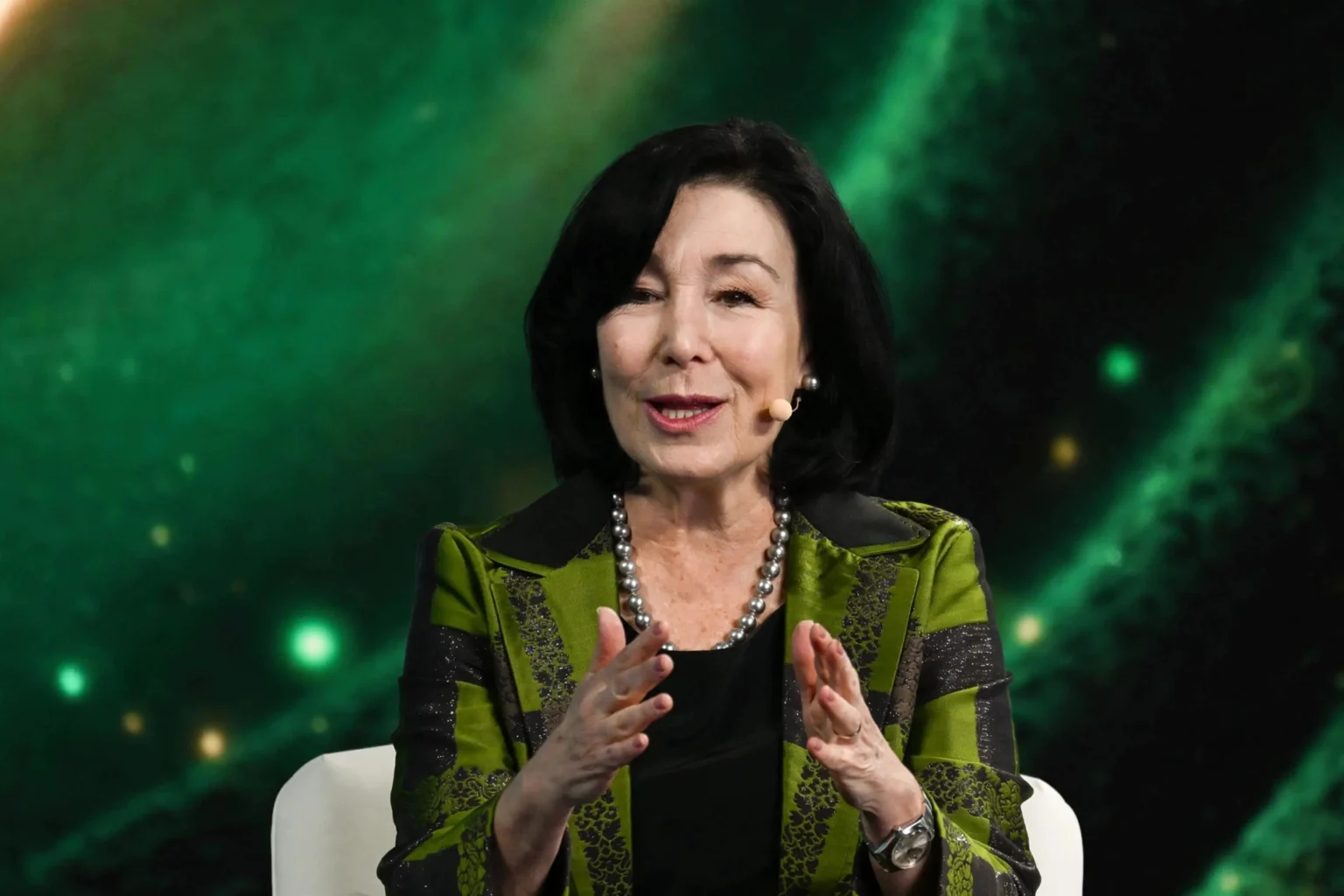

Safra Catz and Peter Lynch are prominent American business figures, but their achievements belong to different arenas. Catz built her career in investment banking and became one of Oracle’s most consequential executives. Lynch earned his reputation managing Fidelity’s Magellan Fund and teaching ordinary investors how to evaluate companies. They are not known to be relatives, business partners, or professional collaborators. Their clearest connection is educational: both attended the University of Pennsylvania’s Wharton School, though in different programs and years. Comparing their careers reveals two distinct ways of creating value—running a global technology company and investing in publicly traded businesses.
What Connects Safra Catz and Peter Lynch?
The connection is Wharton. Lynch earned his MBA from the school in 1968, while Catz completed her Wharton undergraduate degree in 1983 before receiving a law degree from the University of Pennsylvania in 1986. Their studies did not overlap.
Authoritative biographies from Oracle, Fidelity-related organizations, Wharton, and other established institutions do not identify a family relationship, joint venture, investment partnership, or direct professional association between them. Pairing the names makes sense primarily as a comparison between two Wharton alumni whose careers required financial analysis and disciplined capital allocation.
Quick Facts
| Fact | Safra Catz | Peter Lynch |
|---|---|---|
| Primary field | Corporate leadership and enterprise technology | Investment management |
| Best known for | Leading Oracle as CEO from 2014 to 2025 | Managing Fidelity’s Magellan Fund from 1977 to 1990 |
| Wharton education | Undergraduate degree, Class of 1983 | MBA, Class of 1968 |
| Other education | University of Pennsylvania law degree, 1986 | Boston College degree, 1965 |
| Signature expertise | Financial operations, acquisitions and corporate strategy | Stock research and active portfolio management |
| Later role | Executive vice chair of Oracle | Vice chairman of Fidelity Management & Research and philanthropist |
Safra Catz: From Investment Banking to Oracle
Born in Israel, Catz moved to the United States as a child. She studied business at Wharton and law at the University of Pennsylvania, giving her a combination of financial and legal training that suited a career in corporate transactions.
Catz joined Donaldson, Lufkin & Jenrette in 1986. She eventually became a managing director in investment banking and ran the firm’s software-related business. That experience placed her at the intersection of technology, finance, valuation and dealmaking.
She joined Oracle as a senior vice president in 1999 and entered its board of directors in 2001. Catz became president in 2004 and held several senior positions, including chief financial officer. A Wharton profile of Catz credits her with driving Oracle’s takeover of PeopleSoft, a deal that strengthened Oracle’s position in business software.
In 2014, Catz and Mark Hurd became Oracle’s co-CEOs after Larry Ellison left the chief executive position. She later served as sole CEO and remained in charge during Oracle’s expansion in cloud infrastructure. In September 2025, Oracle appointed her executive vice chair while promoting Clay Magouyrk and Mike Sicilia as co-CEOs. Oracle’s announcement credited Catz with leading the company as it developed into a major hyperscale cloud provider.
Her career is defined less by personal publicity than by execution: controlling costs, assessing acquisitions, integrating businesses and directing capital toward Oracle’s strategic priorities. Her current Oracle biography also identifies her as a Stanford Graduate School of Business lecturer.
Peter Lynch: Research, Magellan and Long-Term Investing
Peter Lynch graduated from Boston College in 1965 and earned his Wharton MBA in 1968. He began working full time at Fidelity in 1969, became director of research in 1974 and took control of the Magellan Fund in 1977.
His 13 years at Magellan produced one of the best-known records in mutual fund history. Lynch generated an average annual return of 29.2%, while the fund’s assets grew from approximately $18 million to $14 billion. These figures are documented in his biography at the American Academy of Arts and Sciences and a Wharton retrospective.
Lynch’s method combined direct observation with detailed company research. His advice to “invest in what you know” was not an invitation to buy a familiar brand without analysis. Familiarity provided a starting point. Investors still needed to study earnings, debt, competitive advantages, valuation and the reasons a company might grow.
“Know what you own, and know why you own it.” — Peter Lynch, as quoted by Investopedia
Lynch left day-to-day fund management in 1990 at age 46. He subsequently became a Fidelity vice chairman, mentored investment analysts and devoted more attention to philanthropy. He also wrote One Up on Wall Street, Beating the Street and, with John Rothchild, Learn to Earn. His publisher’s biography identifies these works as central parts of his legacy.
Career Timeline
| Year | Milestone |
| 1965 | Lynch graduates from Boston College |
| 1968 | Lynch earns his MBA from Wharton |
| 1977 | Lynch begins managing the Fidelity Magellan Fund |
| 1983 | Catz completes her undergraduate studies at Wharton |
| 1986 | Catz earns her Penn law degree and begins working at DLJ |
| 1990 | Lynch steps down as Magellan’s portfolio manager |
| 1999 | Catz joins Oracle |
| 2014 | Catz becomes Oracle co-CEO |
| 2025 | Catz becomes executive vice chair of Oracle |
Two Different Approaches to Creating Value
Catz worked from inside the company
Catz’s decisions affected Oracle’s operations, financing, acquisitions and competitive position. A corporate executive must allocate resources while also managing employees, customers, products, regulators and shareholders. Success depends not only on selecting an attractive opportunity but also on executing it.
Lynch evaluated companies from the outside
Lynch could compare businesses across industries and direct Magellan’s capital toward the stocks he considered most promising. He did not manage those companies. His responsibilities centered on research, portfolio construction, risk and returns for fund shareholders.
Both relied on informed judgment
Despite their different jobs, Catz and Lynch built careers around similar disciplines:
- Understanding the economics of a business
- Distinguishing a good company from an overpriced opportunity
- Studying numbers before committing capital
- Maintaining a clear reason for each major decision
- Focusing on long-term value rather than short-term attention
Their records are not directly comparable. Catz’s performance involved the evolution of one large technology company, while Lynch’s reputation rests on returns produced across a diversified investment portfolio.
Frequently Asked Questions
Did Safra Catz and Peter Lynch attend Wharton together?
No. Peter Lynch completed his Wharton MBA in 1968. Safra Catz received her Wharton undergraduate degree in 1983, 15 years later.
Did Peter Lynch invest in Oracle?
No dependable source cited here establishes a notable Oracle investment by Lynch. Magellan held many stocks during his tenure, but a specific investment connection between Lynch and Catz should not be assumed without historical portfolio evidence.
What was Safra Catz’s most important role at Oracle?
Catz served as Oracle’s CEO from September 2014 until September 2025. She is now executive vice chair of the company’s board.
What made Peter Lynch’s Magellan record exceptional?
Magellan averaged a 29.2% annual return during his 13-year tenure. The fund also expanded from roughly $18 million to $14 billion in assets under management.
What can business readers learn from both careers?
The shared lesson is to understand an opportunity before committing resources. Lynch applied that principle when choosing stocks; Catz applied it to acquisitions, financial operations and corporate strategy. Neither approach depended on slogans alone—both required research and execution.
Conclusion
Safra Catz and Peter Lynch share a Wharton connection and a reputation for rigorous financial decision-making, but their careers developed independently. Catz became a leading technology executive and corporate strategist at Oracle. Lynch became one of the most influential mutual fund managers of the modern era. Studied together, they offer complementary lessons: one shows how capital is deployed inside a global company, while the other explains how an investor evaluates companies from the outside.
Read also: Kelsy Ully: Her Career and Marriage to Jonathan Scott
